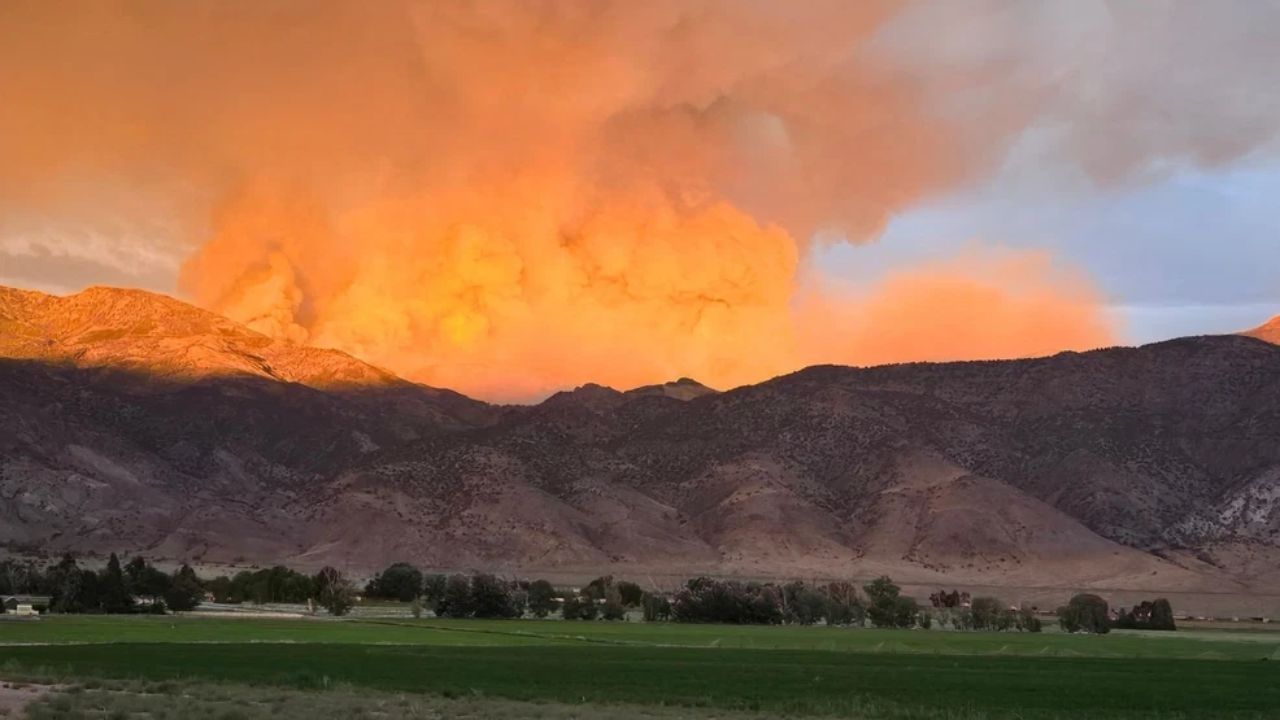
RENO, Nevada — Dry air, gusty winds, and increasingly parched vegetation are creating elevated fire weather concerns across parts of the western United States through Thursday, according to the latest national fire weather outlook issued Wednesday afternoon.
The areas facing the greatest concern include a broad stretch of Nevada and Utah, along with a separate zone across northern Montana near the Canadian border.
Forecasters say the combination of low humidity, dry fuels, and breezy conditions could allow fires to spread quickly if one starts, especially in open grassland and desert areas.
Nevada and Utah Facing Widespread Elevated Fire Conditions
The largest area under elevated fire danger covers much of Nevada and extends into western and central Utah. Late May often marks the beginning of more active fire weather patterns across the Great Basin as vegetation dries out ahead of summer heat.
Officials are urging residents to avoid activities that could accidentally spark a wildfire. Outdoor burning, dragging chains, improperly discarded cigarettes, and equipment that creates sparks can all become dangerous during these conditions.
Fire crews across the region remain alert as even small fires could spread rapidly in windy terrain.
Northern Montana Also Under Elevated Fire Risk
A second elevated fire weather area has been outlined across northern Montana, particularly near the Canadian border.
While separate from the Great Basin threat, similar concerns exist across the northern plains and Rocky Mountain foothills where dry grasses and gusty winds can quickly fuel fast-moving fires.
Rangeland and open rural areas are especially vulnerable during this type of weather setup, which is common during late spring before greener summer vegetation fully develops.
No Critical or Extreme Fire Threats Issued
Although elevated fire danger exists in multiple western states, forecasters have not issued any higher-level Critical or Extreme fire weather alerts anywhere in the country at this time.
That means weather conditions are concerning but are not currently expected to reach the most dangerous wildfire thresholds.
Still, residents in affected areas are encouraged to stay cautious and report any signs of smoke or fire to local authorities immediately.