
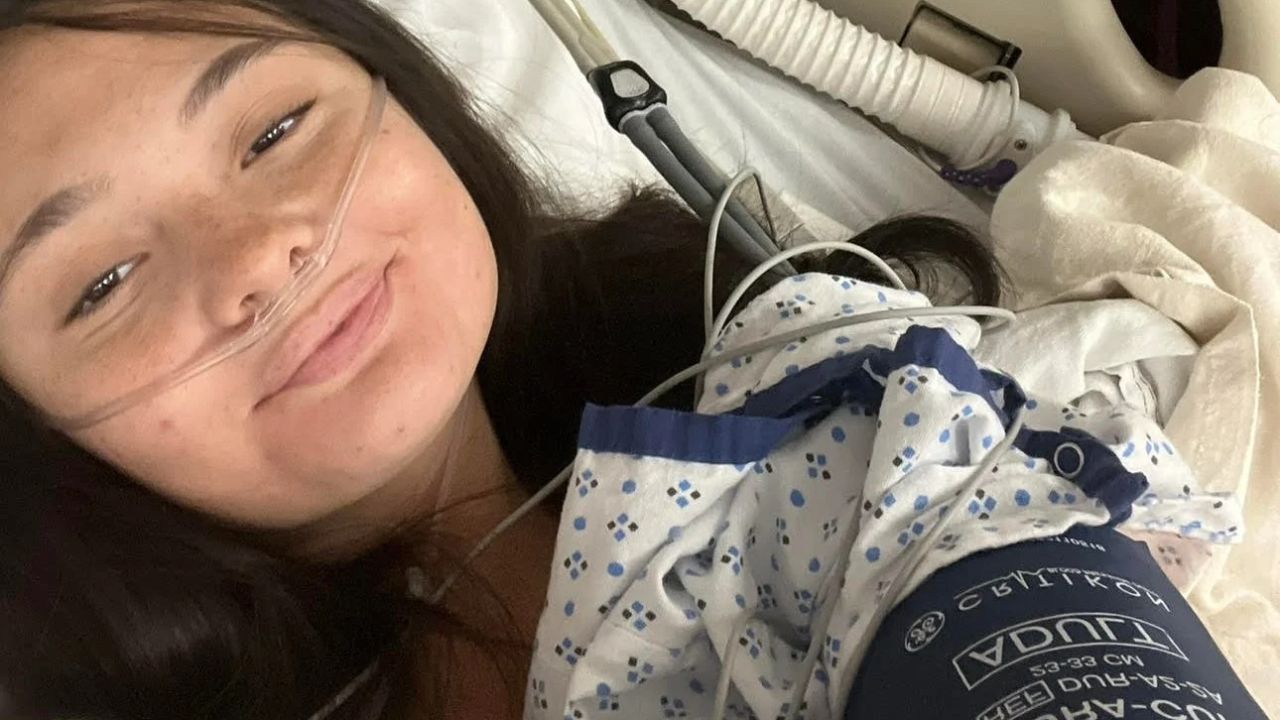
What started as brief waves of stomach pain for a busy college student turned into a life-altering diagnosis that no 20-year-old expects to hear: stage 2 colon cancer.
Katie Davis was living a typical college life at West Chester University in Pennsylvania. A junior majoring in marketing, she balanced classes, her job at Playa Bowls, and sorority life. When she first felt pain in the upper right side of her abdomen, it didn’t seem serious.
“It would come and go,” she recalled. “Sometimes it lasted just seconds.”
At first, the pain was sporadic and easy to dismiss. But over time, the episodes became more intense — sometimes so severe they caused her to double over.
When The Pain Became Impossible to Ignore
Three months after the symptoms began, Davis visited urgent care while staying at her boyfriend’s family beach house. Without ultrasound equipment available, doctors suggested it might be an ovarian cyst and advised her to monitor the pain.
Days later, things escalated.
She developed chills and began vomiting while at her parents’ home. That’s when she went to the emergency room — a decision that would change everything.
Imaging tests revealed inflammation in her colon along with free fluid, which can signal infection, trauma, or something more serious. Doctors mentioned possibilities like Crohn’s disease, ulcerative colitis, or — in more severe cases — colon cancer.
A colonoscopy was scheduled.
The Moment Everything Changed
Davis didn’t expect bad news.
But when she woke up from the procedure and noticed she had been placed in a separate room from other patients, she sensed something wasn’t right.
The doctor told her and her mother he was “pretty positive” the mass found in her colon was cancerous — even before the biopsy results confirmed it.
Shortly afterward, she was officially diagnosed with stage 2 colon cancer.
“I was numb,” she said. “Just confused. How did I get this?”
A Difficult Road Through Treatment
Davis underwent colon surgery and began chemotherapy soon after. But the treatment was anything but smooth.
She struggled to tolerate stronger chemotherapy drugs. Severe fatigue, nausea, and neuropathy — described as painful “pins and needles” sensations in her hands — made daily life difficult.
Then came the most alarming side effect: vision loss.
“My vision would go completely black,” she said.
The drug oxaliplatin, used in many colon cancer treatments, can cause neurological and vision complications in some patients. After researching and connecting with others through the Colorectal Cancer Alliance, Davis switched to an oral-only chemotherapy regimen.
While this extended her treatment from three months to six, it allowed her to continue therapy without constant hospital visits.
Fighting Cancer — While Staying in College
Through it all, Davis tried to maintain some sense of normalcy. She continued attending classes in person whenever she could. Her professors were aware of her diagnosis, but she pushed herself to stay connected to campus life.
“My friends were there. My boyfriend was there,” she said. “I tried to be there as much as possible.”
Still, balancing schoolwork with the toll of chemotherapy was overwhelming.
A New Chapter
In June 2025, Davis completed her chemotherapy. Soon after, she was declared cancer-free.
Now 21 and entering her senior year, she’s interning at a financial advisory firm and focusing on life after graduation. Though she will continue routine blood tests every three months and yearly colonoscopies, she says finishing treatment felt like reclaiming her life.
“I’m excited to be normal again,” she said.
A Warning for Young Adults
Colon cancer has increasingly affected younger adults in recent years and has become one of the leading causes of cancer-related deaths among people under 50.
Davis says many doctors told her that people her age often don’t experience noticeable symptoms — making early detection even more challenging.
Looking back, she’s grateful she paid attention to her body.
Her message to others: Don’t ignore persistent or unusual symptoms — even if they seem minor.
“You’re not alone,” she said. “There are other people going through it who can help you.”
What began as brief stomach pain became a powerful reminder that listening to your body can save your life.