
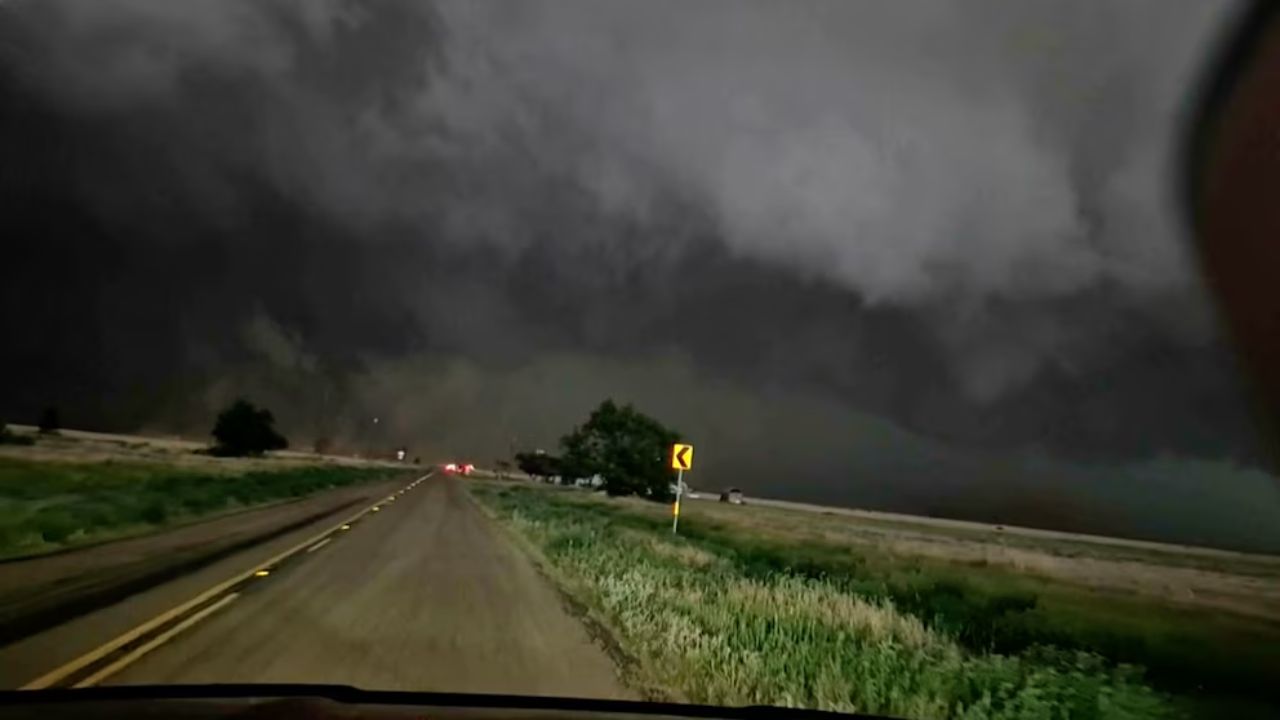
GRAND ISLAND, Nebraska — The kind of storm you hope never comes to your town came roaring through parts of the Central Plains this week — and it is not finished yet.
A major severe weather outbreak has been unraveling across a wide stretch of the country since Sunday, bringing tornadoes, destructive winds and large hail from Texas to the Great Lakes.
And Tuesday, the threat moves closer to millions more Americans.
What Has Already Happened
Sunday alone produced over 30 tornado reports across the Plains, stretching from Kansas all the way up to southern Minnesota.
One of the most destructive struck Howard County, Nebraska, near the small town of St. Libory — about 10 miles north of Grand Island — around 5 p.m. local time.
A rare tornado emergency was also issued by the National Weather Service near Hebron, Nebraska, a town close to the Kansas state line and roughly 65 miles southwest of Lincoln. That kind of warning is reserved for confirmed, life-threatening tornadoes already causing catastrophic damage.
More damage was confirmed north of Ashland, Nebraska, between Lincoln and Omaha. Homes near Plattsmouth, south of Omaha along the Missouri River, were also struck by an apparent tornado.
The destruction did not stop at Nebraska’s borders. Tornadoes were also reported in northwest Iowa and southern Minnesota, including near Mason City and Worthington.
Near Estherville, Iowa, thunderstorm wind gusts reached 82 mph. A grain elevator in Greenville, Iowa, was damaged by violent storm winds.
Monday Made Things Worse
Monday morning, a severe storm blasted the Greater Chicago area, sending a wind gust of 79 mph through Midway Airport.
By Monday evening, another powerful tornado was on the ground near Pawnee City, Nebraska. The National Weather Service issued a second tornado emergency, describing it as a large, dangerous and life-threatening storm.
Across Kansas and Nebraska, multiple tornado warnings were issued with “Particularly Dangerous Situation” tags — one of the strongest signals forecasters send when a situation is especially severe.
The total count through Monday evening: more than 15 tornado reports, over 150 wind damage reports and more than 50 hail reports. That number is still climbing.
Damage survey teams are being sent to the hardest-hit areas over the next several days to confirm the number, intensity and paths of the tornadoes.
Tuesday’s Threat Is Not Over
Tuesday brings a new risk zone.
Severe thunderstorms are expected ahead of the same frontal system, stretching from parts of the Southern Plains through the mid-Mississippi and Ohio Valleys up into the Great Lakes region.
The tornado threat is expected to be lower Tuesday than it was Sunday or Monday — but damaging wind gusts, large hail and heavy flooding rain remain serious concerns for millions of people in the storm’s path.
Why This Outbreak Is So Unusual
May is typically the most tornado-active month of the year in the United States — but the first two weeks of this May were remarkably quiet.
The reason: an unusual weather pattern had cooler-than-average air sitting over the eastern and central U.S. while the West baked in above-normal heat. That is almost the opposite of what typically fuels widespread severe weather east of the Rockies in spring.
The only notable outbreak before this week was a cluster of eight confirmed tornadoes from supercell thunderstorms on May 6 in southern Mississippi.
Then this week arrived — and made up for the quiet in a big way.
Are you in the path of Tuesday’s storm system? Stay weather-aware, have a plan ready and drop your location in the comments — let your neighbors know you are watching too.