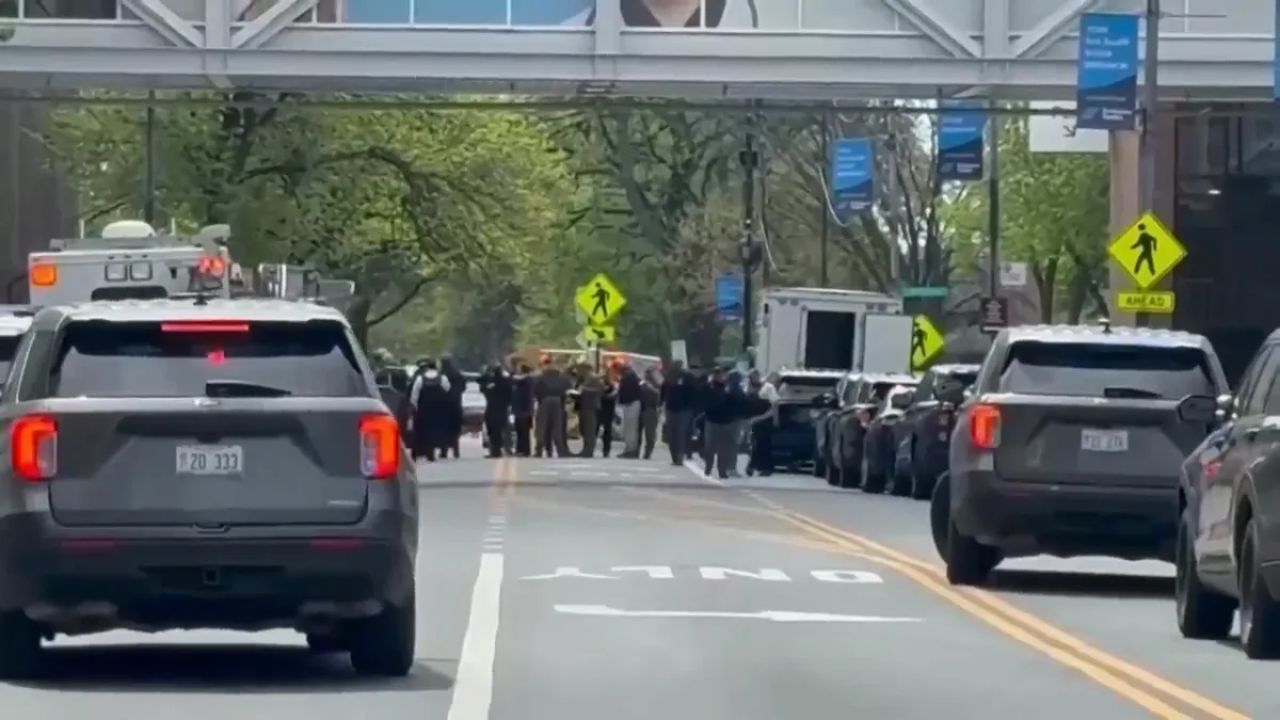
A tragic and deeply troubling incident in Chicago has raised urgent questions about safety procedures after a suspect accused of killing a police officer reportedly smuggled a firearm into a hospital despite multiple searches.
According to officials, 26-year-old Alphanso Talley, described by prosecutors as a repeat offender with a long criminal history, was taken into custody last weekend. What followed inside Swedish Hospital has left both law enforcement and the public searching for answers.
What Happened
Authorities say Talley was arrested and claimed he had swallowed multiple bags of drugs, prompting officers to take him to the hospital for medical evaluation. This type of claim typically requires immediate medical attention, often leading to scans where suspects may be temporarily unrestrained.
Despite being searched by officers and hospital security, investigators believe Talley managed to conceal a Glock 10mm pistol, a compact firearm designed for easy hiding.
While inside the emergency room, Talley—reportedly covered only by a hospital blanket during examination—allegedly retrieved the weapon and opened fire on the officers present.
The incident quickly turned deadly, marking one of the most dangerous situations officers can face: a custodial setting where a suspect unexpectedly gains access to a hidden weapon.
How Was the Gun Hidden?
Law enforcement sources indicate that Talley may have hidden the firearm within folds of his body. Reports suggest he had recently lost a significant amount of weight, which may have created concealment areas that went undetected during standard searches.
Experts say such concealment methods, while rare, highlight the extreme lengths some individuals may go to avoid detection.
Retired Gene Roy explained that officers are trained extensively to search suspects, including sensitive areas when necessary. However, even with strict protocols, determined individuals can sometimes exploit gaps.
A Pattern Investigators Are Not Ignoring
Authorities also revealed that Talley had used a similar tactic in the past. In April 2025, he reportedly claimed to have swallowed drugs during an arrest, leading to a hospital visit. That earlier incident did not involve a weapon, but investigators now believe it may have helped him understand how the system works.
This raises concerns about whether the suspect deliberately used a known medical protocol as a way to create an opportunity.
Bigger Questions for Law Enforcement
The case is now prompting broader discussions about custodial safety, hospital security, and search procedures.
Situations involving medical emergencies are particularly challenging. Officers must balance a suspect’s health needs with security risks, often in fast-moving and high-pressure environments.
Experts note that most searches are effective, but no system is completely foolproof—especially when dealing with experienced offenders who are highly motivated to escape or cause harm.
Ongoing Investigation
Officials say the investigation remains active, with multiple agencies reviewing what happened and whether any procedural changes are needed.
Federal prosecutors have also indicated that the firearm used in the incident was allegedly purchased illegally by Talley’s girlfriend in another state, adding another layer to the case.
Community Impact
Beyond the procedural questions, the emotional toll of the incident is significant. For officers, hospital staff, and the wider Chicago community, the event serves as a stark reminder of the unpredictable risks involved in law enforcement.
Authorities are expected to release further updates as more details become available.