WORCESTER, Massachusetts — If you grew up in New England, you probably remember the smell of rotisserie chicken walking through the door on a weeknight. The mac and cheese. The cornbread. The gravy you wanted to drink straight from the container.
That era is officially over in Massachusetts.
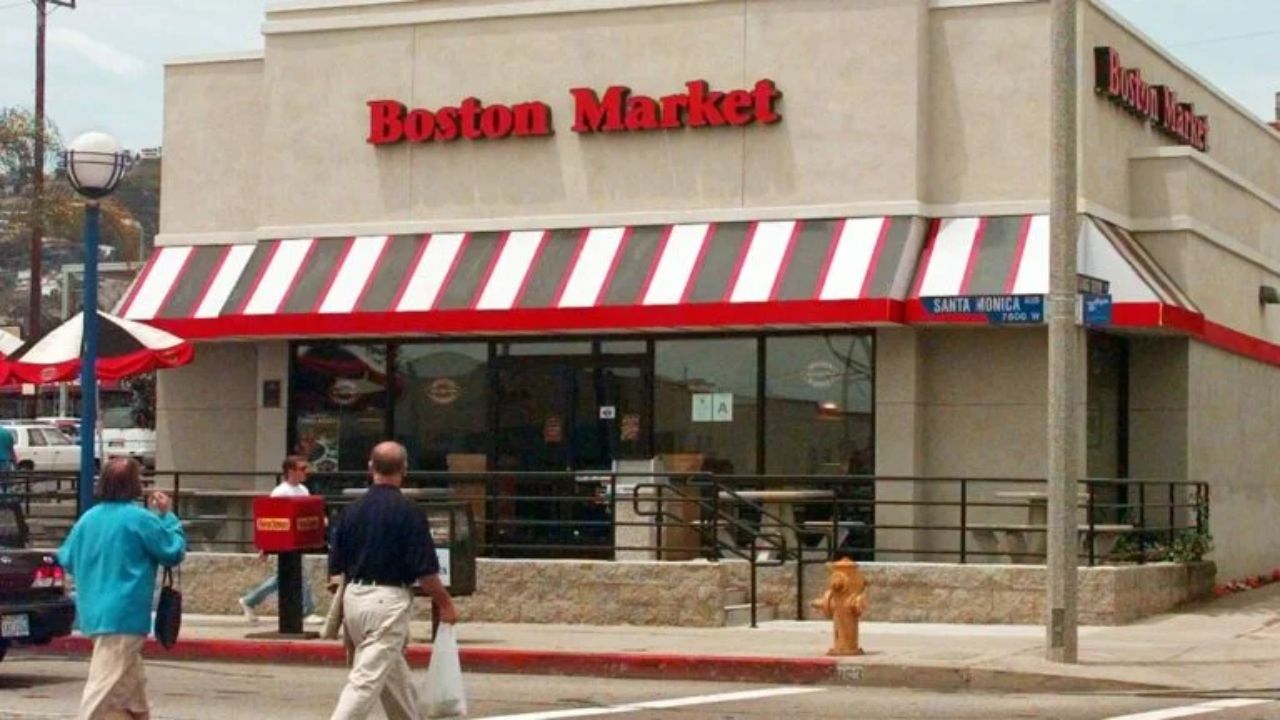
The last Boston Market in the state — a Worcester location — closed in March 2025. The state had already seized it over unpaid taxes. Its final Yelp rating was 2.5 stars.
So how did one of America’s most comforting chain restaurants end up here?
It Started With a Brilliant Idea in Newton
Boston Chicken was founded in Newton, Massachusetts in 1985 by two Northeastern University students — Steven Kolow and Arthur Cores.
Their pitch was simple: rotisserie chicken at fast-food prices, served hot and fast, with sides that felt like a home-cooked meal.
At the time, that was genuinely unusual. Most fast-food chicken was fried. Boston Chicken felt like a healthier, slightly elevated option — and customers loved it.
The concept took off. The chain grew rapidly through the late 1980s and early 1990s. In 1995, the brand rebranded as Boston Market to signal that it was more than just poultry.
By 1996, the company was projecting 2,700 new franchise locations over the next five to seven years — nearly tripling its footprint.
The Expansion Became Its Undoing
That aggressive growth came with a massive price tag.
Boston Market piled on debt to fund the expansion. Just two years after announcing those ambitious plans, the chain filed for Chapter 11 bankruptcy protection.
McDonald’s stepped in and bought it in 2000 for $173.5 million. Under the Golden Arches, things were relatively stable — until 2007, when McDonald’s sold it to private equity firm Sun Capital.
One analyst described the chain at that point as “flagging.”
Sun Capital tried to revive it with sandwiches and expansion into Florida and Texas, but eventually sold it again in 2020 to Engage Brands of the Rohan Group.
The Lawsuits Piled Up
Behind the scenes, things were getting ugly.
Suppliers and distributors began accusing Boston Market of simply not paying its bills. By some counts, the chain faced as many as 150 lawsuits related to unpaid debts.
The biggest came from US Foods, one of the nation’s largest food distributors, which claimed in 2023 that Boston Market owed more than $11 million.
A judge ruled against Boston Market and ordered it to pay $11.9 million in a default judgment the following year.
Meanwhile, the food itself was declining. A 2024 Washington Post review found the creamed spinach, mashed potatoes, and mac and cheese all underseasoned. Even the chicken — once the whole point — tasted flat.
Where Things Stand Now
More than 90% of Boston Market’s locations have closed since the end of 2022.
The chain now operates roughly two dozen restaurants nationwide. The closest one to Massachusetts is in Hackensack, New Jersey — not exactly a quick drive for a craving.
In Massachusetts, the story is over.
Where to Get Your Rotisserie Fix Locally
The good news: the Boston area has some excellent alternatives still going strong.
Shy Bird — Locations in Fenway, South Boston, and Cambridge. Half chicken for $20, whole for $29, with a flavorful spiced dry rub that holds up to anything Boston Market ever served.
Modern Rotisserie — Part of Newton’s New England Soup Factory, using locally raised birds and a rotisserie custom-built in France. Whole chicken starts at $17.95.
Amba — Chef Will Gilson’s Cambridge spot offers a shawarma-spiced rotisserie chicken with East Mediterranean sides, pita, and mezze. A half meal runs $23.
Farm Grill & Rotisserie — A Newton Greek restaurant that has been open since 1986. Half chicken with two sides and a Greek salad for $14.
Boston Market may be gone from Massachusetts, but the craving it built over four decades is clearly still very much alive.
Did you have a favorite Boston Market order? Or a go-to local spot that fills the gap? Share it in the comments — someone out there is looking for their next great rotisserie meal.