Baltimore, Maryland – A Baltimore mother says she is still in shock after prosecutors announced no charges will be filed in the in-custody death of her son following a mental health crisis. The decision has renewed scrutiny of how the city handles behavioral health emergencies and whether current police-led responses are failing vulnerable residents.
Incident Overview
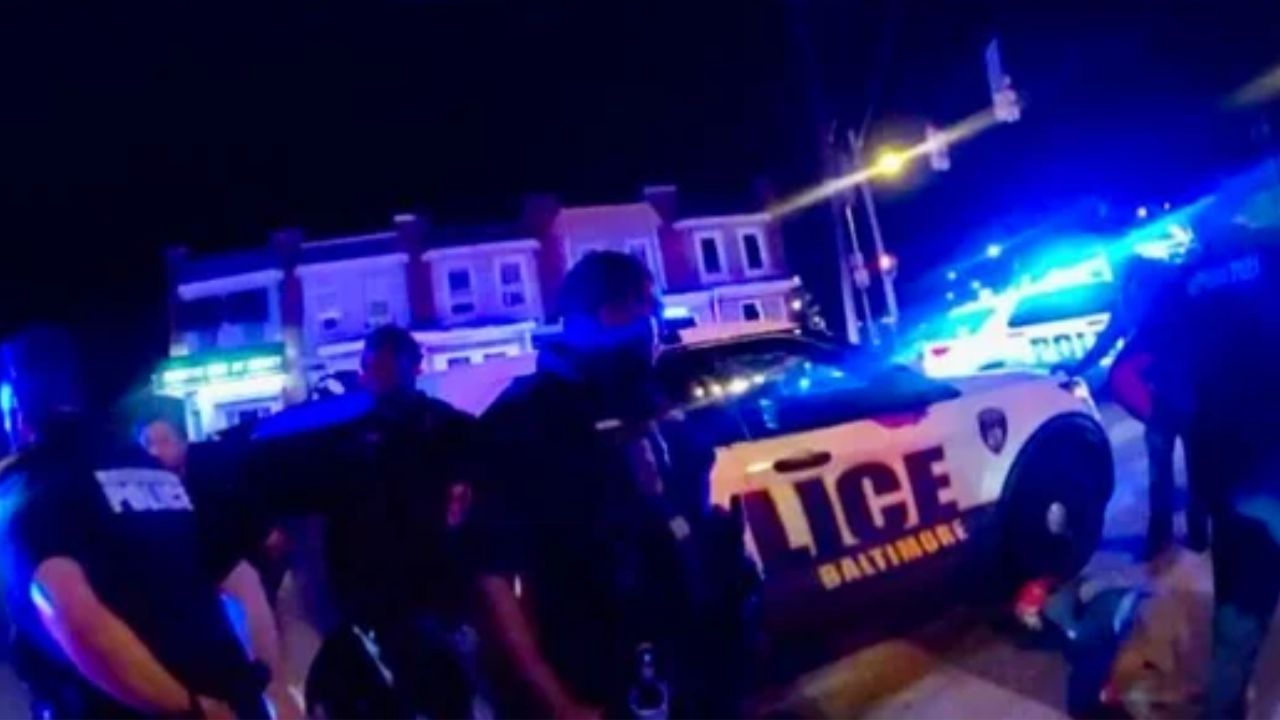
Dontae Melton Jr. died in June 2025 after being restrained by police during a mental health emergency near the intersection of Franklin Street and Franklintown Road. This week, the Maryland Attorney General’s Office announced it would not prosecute any of the 10 responding officers, despite the medical examiner ruling Melton’s death a homicide.
Melton’s mother, Eleshiea Goode, said the findings left her “in disbelief” and deeply concerned that similar incidents could happen again.
Timeline of Events
According to investigators, Melton approached police seeking help, something his mother said he had been taught to do. Officers restrained him “for his own safety” and requested an ambulance, but medical help never arrived due to a dispatch system failure.
Body-worn camera footage reviewed by investigators showed officers noting that Melton’s pulse was racing and his body temperature was elevated, signs that his mental health crisis was becoming a medical emergency.
Eventually, an officer transported Melton to a hospital located three minutes away, but he later died.
Details From Officials
The Independent Investigations Division (IID) concluded that officers did not act recklessly or negligently. In its findings, the division stated that officers followed Baltimore Police Department policy while waiting for medical services that never arrived. The full report is detailed in the IID findings released by the Maryland Attorney General’s Office.
Despite those conclusions, the medical examiner ruled Melton’s death a homicide, determining he died due to a combination of drug intoxication, hyperthermia, and restraint.
Mother’s Response and Key Facts
Goode strongly rejected the findings, saying they focused more on her son’s condition than on the failures surrounding the response.
“The complete incident was a failure. I saw my son walking, talking, active, going to the police as he was taught to do. They failed him miserably.”
She emphasized that her criticism centers on what did not happen rather than what officers physically did.
“This is not about the way they acted. This is about the inaction of them. That’s the cause of negligence.”
Goode said the report felt like victim-blaming and added that the consequences of those failures were irreversible.
“The mistakes cost my son his life. That can never happen again.”
Additional Context: Similar Cases
Melton’s death was not an isolated incident. Just days earlier, police fatally shot Bilal “BJ” Abdullah in the Upton neighborhood after officers said he pointed a gun at them. The attorney general also declined to file charges in that case.
The day after Melton’s death, police killed Pytorcarcha Brooks, a 70-year-old woman reportedly experiencing a mental health crisis and armed with a knife, just blocks away from where Melton was restrained.
These cases have intensified concerns about how law enforcement responds to people in psychological distress.
City Council Hearing on Mental Health Response
Following the release of the attorney general’s report, the Baltimore City Council held a hearing focused on crisis response alternatives to traditional police involvement.
Council President Zeke Cohen acknowledged improvements in crime reduction but warned that interactions with law enforcement still too often end in tragedy.
“We are extremely concerned that we do not have an effective crisis response system where we can quickly provide people who can assist and provide mental health support.”
Cohen stressed that police are not trained clinicians and said the city must rethink who responds to certain emergency calls.
“Let’s be honest, cops are not clinicians.”
He noted that Baltimore’s existing crisis response program is understaffed and limited in when it can be deployed. City leaders are exploring models used in other cities and considering funding options, including opioid restitution funds, to expand non-police crisis teams.
Conclusion
As Baltimore leaders debate reforms, Goode says her focus remains on ensuring her son’s death leads to meaningful change.
“Do not forget that my son was a decent human being who deserved to live.”
Her warning underscores a broader question facing the city: whether systemic failures in mental health crisis response will be addressed before another life is lost.
If you or someone you know has been affected by a mental health crisis or police response, awareness and early intervention can be critical. Share your experiences in the comments below.