
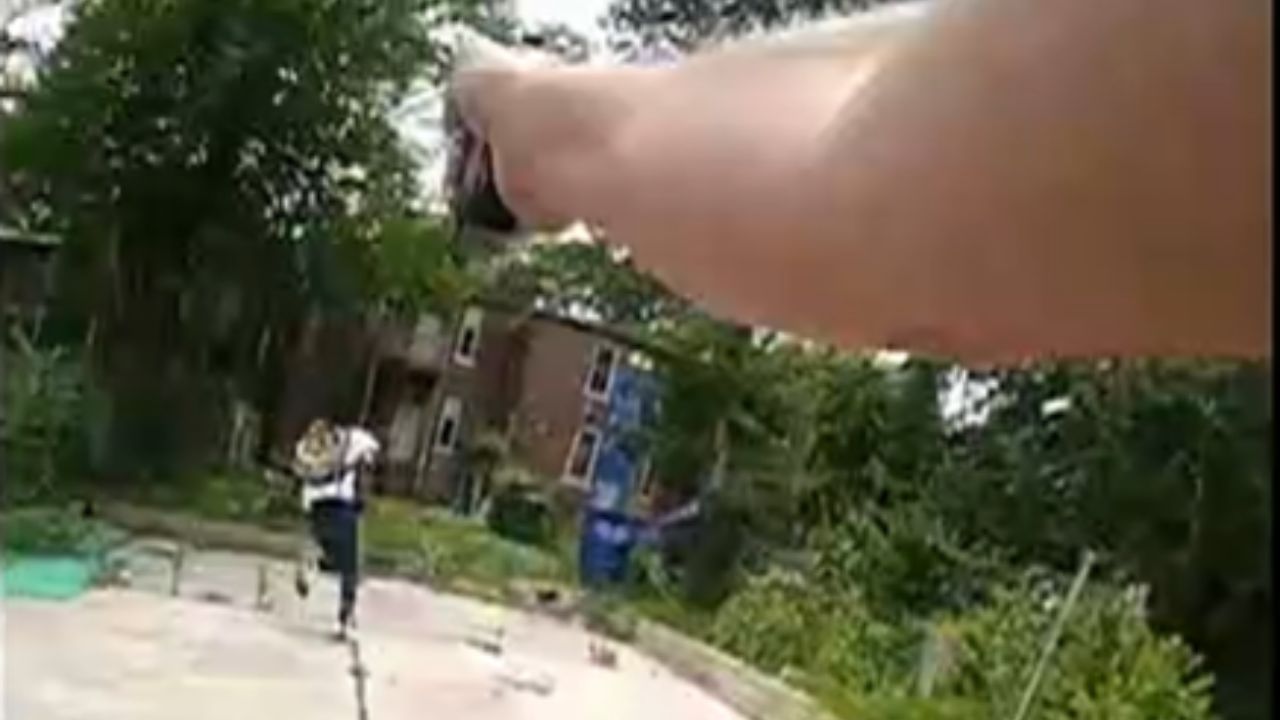
St. Louis, Missouri — A newly released body camera video has brought renewed scrutiny to a fatal police shooting in St. Louis, where a 17-year-old boy, Emeshyon Wilkins, was shot in the back of the head while fleeing from officers in June 2024. The footage appears to contradict initial statements from the St. Louis Police Department, which had claimed the teen pointed a gun at officers before being shot.
The video, made public this week, has intensified calls for transparency, accountability, and justice from the teen’s family and community members.
What Happened That Night
According to police, the incident began when officers attempted to stop an SUV reported as stolen. Authorities described it as a brief pursuit, while the family’s attorney characterized it as a slow-speed chase, with the vehicle moving at around 10 mph.
The situation escalated after the SUV stopped and Wilkins fled on foot. Two officers pursued him — one carrying a taser and the other a firearm. Bodycam footage shows the armed officer shouting commands for Wilkins to get on the ground and to drop a gun.
However, the teen continued running. Moments later, the officer fired multiple shots. One of those bullets struck Wilkins in the back of the head, killing him.
Contradictions in the Official Account
Initial police statements suggested that Wilkins posed an immediate threat by pointing a firearm at officers. But the released footage does not show the teen holding or aiming a weapon at any point during the pursuit.
Further complicating the case, investigators later found a firearm in Wilkins’ pocket — but it was disassembled into multiple parts and was not capable of being fired.
The police department has since acknowledged that early information shared with the public was based on third-party accounts that were not consistent with the actual events captured on video.
Family and Legal Response
Wilkins’ family says they are still searching for clear answers nearly a year after the incident. His mother has publicly expressed grief and frustration, saying her son “should still be here.”
Their attorney, Al Watkins, criticized the handling of the case and the delay in releasing the footage. He revealed that the video was only obtained after filing a federal lawsuit, alleging a lack of transparency from authorities.
Watkins has argued that the footage shows no immediate threat to officers or the public, raising serious concerns about the justification for the use of deadly force.
Police Response and Policy Changes
Following the video’s release, the St. Louis Police Department stated that it has since updated internal procedures. The department now ensures that body camera footage is reviewed more quickly during critical incidents to avoid misinformation in early reports.
Officials acknowledged that earlier access to the footage in this case would have provided greater clarity and potentially prevented the spread of inaccurate information.
The officer involved in the shooting has been placed on administrative (desk) duty with pay while the investigation continues.
Ongoing Investigation
The St. Louis Circuit Attorney’s Office confirmed it received the police investigative report in October and is conducting its own independent review to determine whether criminal charges are warranted.
Authorities say the process requires careful evaluation of all evidence and legal factors, though no timeline has been provided for a final decision.
Wider Context and Community Impact
The case has drawn comparisons to past incidents in the region, including the 2014 fatal shooting of Michael Brown in nearby Ferguson. That case sparked nationwide protests and led to ongoing debates about policing, race, and accountability in the United States.
Now, Wilkins’ death is once again placing St. Louis under national attention, with community members demanding transparency and systemic change.
What Comes Next
As the investigation continues, the central questions remain unanswered: whether the use of deadly force was justified, and why initial information shared with the public did not match the evidence captured on video.
For Wilkins’ family, the focus is clear — they are seeking truth, accountability, and justice for a life they say was taken too soon.