
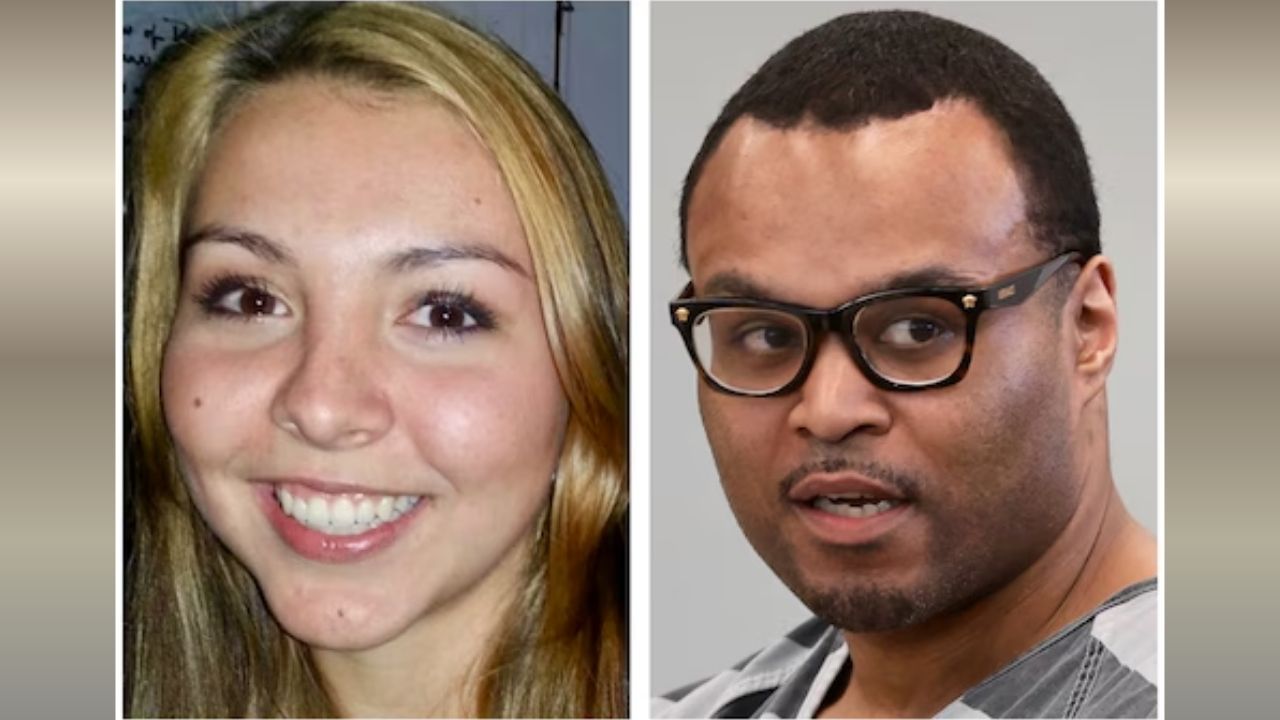
A 33-year-old Oregon man has been sentenced to life in prison after being convicted of murdering his former romantic partner and burning her body in an attempt to conceal the crime. Despite the jury’s verdict and the weight of evidence presented during trial, he continued to proclaim his innocence during sentencing.
Bobby Alsup received a life sentence with the possibility of parole after 29 years and four months — a longer minimum term than typically imposed in similar cases. The court’s decision reflected what prosecutors described as the particularly disturbing and violent nature of the crime.
The victim, 33-year-old Kaley Snow, was remembered by family members as compassionate and generous, even during difficult periods in her life. During the emotional sentencing hearing, her mother, Tracey Snow, directly addressed Alsup in court, rejecting his denial and describing the overwhelming grief her family has endured.
“Kaley would try to help anyone,” her mother said, adding that even in her final days, her daughter extended kindness to people who did not return it.
A Clackamas County jury convicted Alsup of second-degree murder, first-degree arson, and abuse of a corpse after a week-long trial that laid out detailed forensic evidence and testimony. Judge Jeffrey Jones followed the prosecution’s recommendation in sentencing and ordered that Alsup’s life term will begin only after he completes nearly six additional years for a violent jail assault committed while awaiting trial.
According to court records, Alsup fractured another inmate’s eye socket during a fight inside the jail. The judge made clear that this pattern of violence weighed heavily in the court’s decision.
During his statement to the court, Alsup said he intends to appeal the conviction. He claimed he had wanted to testify in his own defense but feared the jury would judge him based on his criminal history rather than the facts of the case. He offered an apology to the victim’s family, though he continued to insist he was not responsible for the killing.
Prosecutors painted a different picture — one supported by phone location data, DNA findings, blood spatter analysis, and witness testimony, including statements from Alsup’s girlfriend at the time. They also highlighted inconsistencies in Alsup’s own accounts to investigators.
Evidence presented at trial showed that on March 17, 2024, Snow was cleaning a hot tub at her childhood home in unincorporated Clackamas County when she was attacked inside the residence. Prosecutors said Alsup struck her repeatedly in the head with a hammer. Her body was later hidden in a shed on the property that housed the home’s well system.
Friends quickly noticed Snow’s disappearance and began searching for her, but it would take days before authorities uncovered the truth. During that time, Alsup had been briefly jailed following a domestic violence allegation involving his girlfriend. After his release, he returned to Snow’s property and set fire to the shed where her body had been concealed, according to the jury’s findings.
Defense attorneys argued that Alsup stumbled upon Snow’s body and, in a state of panic, made the disastrous decision to destroy evidence. However, prosecutors countered that the physical evidence did not support that narrative.
While the state did not establish a clear motive during trial, prosecutors noted that DNA evidence indicated sexual contact between Alsup and Snow shortly before her death. They also stated that Snow’s body had not been redressed before it was burned, further underscoring the brutality and callousness of the crime.
Alsup’s criminal history was also introduced during sentencing. In 2011, he was convicted for a series of arson incidents involving the stuffing of paper into vehicle gas tanks. The following year, he was convicted in connection with a gang-related prison fight. In 2013, he was convicted of assaulting two homeless women with a tire iron. Prosecutors described him as a repeat violent offender whose actions demonstrated escalating aggression over time.
Senior prosecutor Stacey Borgman characterized Alsup as “an extremely dangerous person” and urged the court to impose a sentence that reflected the severity of the crime and protected the public.
For Kaley Snow’s family, the sentence offers some measure of justice but does not erase their loss. Her mother described her daughter as a former straight-A student who loved the outdoors — camping, fishing, and snowboarding. Though Snow had struggled with alcoholism in recent years, her family emphasized that she remained deeply caring and hopeful about rebuilding her life.
In the aftermath of her daughter’s death, Tracey Snow has memorialized her through tattoos of Kaley’s baby footprints and her favorite flower, the five-petaled plumeria. She says these reminders bring her strength.
“She’s got my back,” her mother said quietly after the hearing. “Now she’s always got my back.”
The case leaves behind painful questions and a community shaken by the violence. As Alsup begins serving his lengthy sentence, the Snow family says their focus remains on preserving Kaley’s memory — not for the tragedy that ended her life, but for the joy and kindness she shared during it.