
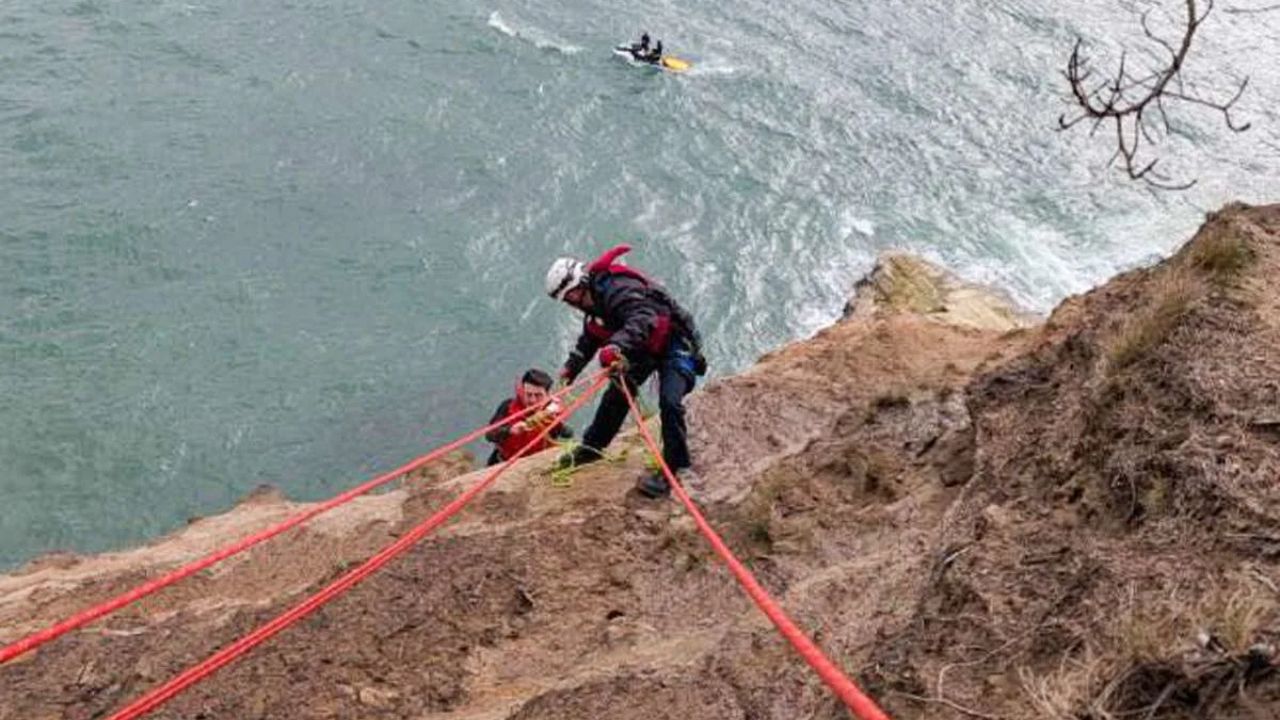
Cape Kiwanda, Oregon – Two surfers were successfully rescued Saturday after being caught in a powerful rip current at Cape Kiwanda Beach, prompting a high-angle rescue involving multiple emergency agencies and a Coast Guard helicopter.
The incident unfolded on February 21, when emergency crews were dispatched following reports that two surfers had been swept into dangerous waters. One surfer managed to return to shore with assistance from others in the area, while the second was pushed toward a rocky cliff, triggering an elaborate rescue mission.
Incident Overview
According to the Nestucca Rural Fire Protection District, crews were called to Cape Kiwanda Beach for a possible “high-angle rescue involving two surfers caught in a rip current.” Rip currents are fast-moving channels of water that flow away from the shoreline and can quickly pull swimmers and surfers offshore.
While one of the surfers was able to make it back safely with help from fellow surfers, the other was forced toward a steep rock cliff and became stranded, unable to climb to safety.
Emergency responders quickly assessed the situation and launched a technical rescue operation to reach the trapped surfer.
Timeline of Events
Authorities responded during the afternoon hours on Saturday, February 21, after receiving reports of the emergency.
Upon arrival:
- One surfer had already returned to shore.
- The second surfer was located near a rock cliff.
- Conditions required a technical rope rescue approach.
- Additional agencies were requested for support.
The challenging terrain and ocean conditions required swift coordination among multiple teams.
Details from Officials
The Nestucca Rural Fire Protection District confirmed that crews deployed a specialized rope rescue system to reach the stranded surfer.
“Our rescue crew deployed our quick-rappel system — equipment obtained through a grant from Oregon State Parks — allowing firefighters to safely reach the surfer, assist him up the cliff, and escort him back down to the parking lot,” officials stated.
The quick-rappel system enabled firefighters to descend safely from above, secure the surfer, and guide him back to a safe area away from the water and cliff edge.
Both surfers declined medical treatment at the scene, and their identities have not been released. Officials did not report any injuries.
“We are thankful for a positive outcome,” the department said.
Multi-Agency Response
The rescue effort involved coordinated support from several agencies, highlighting the complexity of the situation.
Agencies involved included:
- Nestucca Rural Fire Protection District
- North Lincoln Fire & Rescue, which responded with Water Rescue 16 and provided downstream safety
- The U.S. Coast Guard, which deployed a helicopter to assist
“We are extremely grateful for these partnerships as they help us continue improving the service we provide to our citizens and visitors,” officials added.
The helicopter provided aerial monitoring and backup in case conditions worsened or further extraction was required.
Understanding Rip Currents
Rip currents are one of the leading causes of water rescues at beaches nationwide. According to lifesaving authorities, rip currents are “channelized currents of water flowing away from shore at surf beaches.” They often form near breaks in sandbars or around structures such as jetties and piers.
These currents can:
- Form quickly without warning
- Appear deceptively calm
- Move faster than an Olympic swimmer
- Pull individuals away from shore within seconds
At beaches like Cape Kiwanda, strong surf and rocky terrain can increase the risk, especially for surfers navigating shifting wave patterns.
Safety Reminder from Authorities
Following the rescue, officials used the incident as an opportunity to remind beachgoers about rip current safety.
“If caught in a rip current, remain calm, avoid fighting the current, and swim parallel to the shore until you are out of the current before heading back in. Always check surf conditions before entering the water and never surf or swim alone.”
Key safety tips include:
- Check surf forecasts before entering the water
- Avoid swimming or surfing alone
- Stay aware of posted warnings
- Remain calm if caught in a current
- Signal for help if unable to return safely
Experts emphasize that panic is one of the biggest dangers during a rip current event.
Conclusion
Thanks to quick action, technical rescue equipment, and strong interagency coordination, both surfers survived a potentially life-threatening situation at Cape Kiwanda Beach. Officials say the outcome highlights the importance of preparedness, teamwork, and public awareness around ocean safety.
As beach season approaches, authorities continue urging visitors to stay informed and cautious when entering the water.
If you have experienced dangerous surf conditions or a rip current situation, Share your experiences in the comments below.