
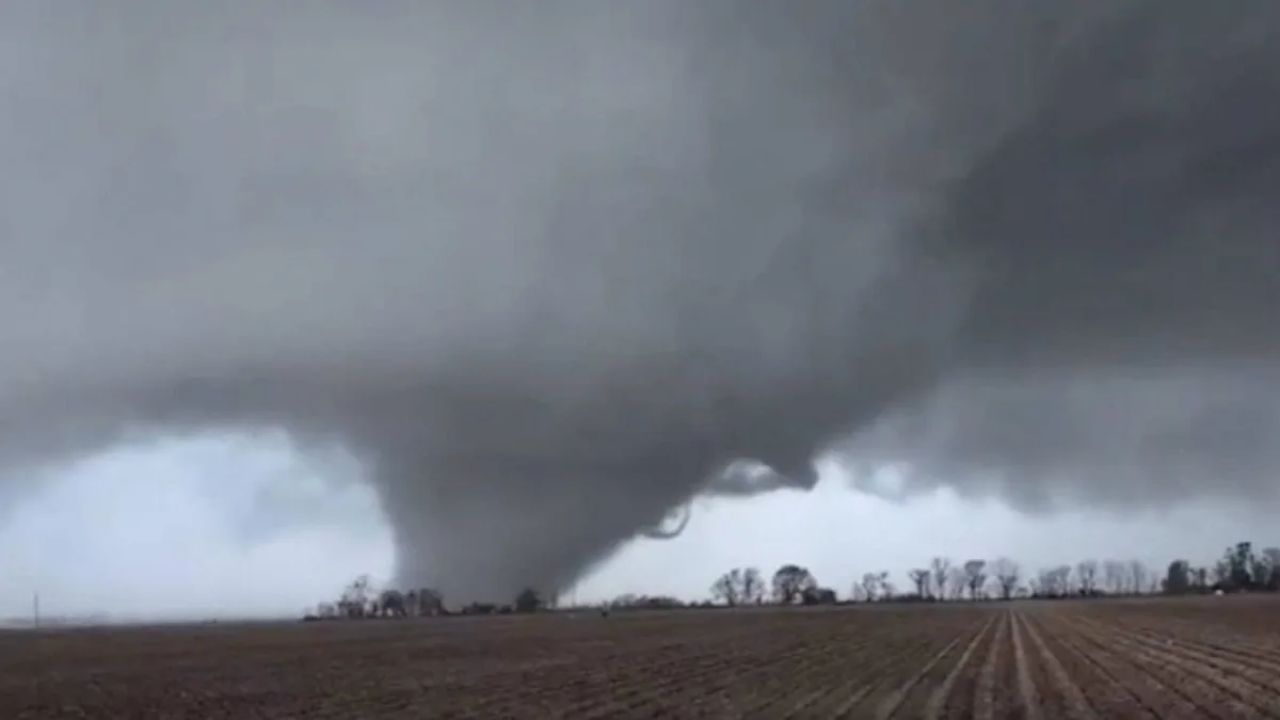
MIDWEST UNITED STATES — Severe thunderstorms are once again sweeping across parts of the Midwest, marking the latest outbreak in an unusually active March for dangerous weather.
Meteorologists say record-breaking late-March heat feeding eastward from the Plains is helping fuel the instability needed for strong to severe storms. The result has been widespread damaging winds, large hail, and multiple active watches across several states.
Damaging Winds and Large Hail Reported
Radar imagery shows a broken line of thunderstorms pushing south and east across the Midwest.
Among the reported impacts:
- Hail as large as lemons fell southwest of Fort Wayne, Indiana.
- Strong winds overturned a semi-truck on US-30 in Van Wert, Ohio, with possible injuries reported.
- A garage roof was blown off in Tipton County, Indiana.
- Damaging winds were widespread across northern Illinois and northern Ohio through early Friday morning.
Emergency managers continue to assess damage in affected areas.
Tornado and Severe Thunderstorm Watches Issued
The National Weather Service has issued tornado watches in several areas, while other regions remain under severe thunderstorm watches.
On weather maps:
- Tornado watches are typically shaded red.
- Severe thunderstorm watches are shaded yellow.
Residents within watch areas are urged to remain alert and prepared for rapidly changing conditions.
Three Steps to Stay Safe During Severe Weather
With storms ongoing, officials recommend the following safety precautions:
- Identify safe shelter ahead of time. If you live in a manufactured home, consider relocating to a designated community shelter or a sturdy building with reinforced concrete before storms intensify.
- Use multiple sources to receive alerts. Enable emergency notifications on your phone and ensure access to a NOAA weather radio. Keep devices fully charged in case of power outages.
- Take immediate action when warnings are issued. If a tornado or severe thunderstorm warning is issued for your location, seek shelter immediately in an interior room away from windows.
Preparedness can significantly reduce the risk of injury during severe weather events.
Storm Fatigue After Active March
The latest outbreak comes after a string of severe weather events earlier this month across the Midwest.
On March 6, four tornadoes struck southern Michigan, including an EF3 tornado in Branch County that killed three people. Additional tornadoes included an EF2 in Three Rivers and an EF1 in Cass County that claimed another life.
On March 10, a supercell storm produced five tornadoes across northeast Illinois and northwest Indiana, including an EF3 tornado in Kankakee, Illinois, which killed three.
Then on March 15, another 17 tornadoes were confirmed across central and southern Illinois.
Just days ago, severe storms brought hail and damaging winds from Illinois to western Pennsylvania.
Why March Has Been So Active
Meteorologists note that strong temperature contrasts, including record warmth in parts of the Plains and Midwest, are creating ideal conditions for repeated severe weather outbreaks.
When warm, moist air collides with cooler air masses and strong upper-level winds, the atmosphere becomes primed for:
- Supercell thunderstorms
- Large hail
- Damaging straight-line winds
- Tornado development
The persistence of these conditions has led to what many describe as “storm fatigue” across affected communities.
What Comes Next
Forecasters warn that additional severe weather episodes may occur if warm air continues feeding into the region.
Residents are encouraged to monitor local forecasts closely and remain weather-aware, especially during evening and overnight hours when storms can intensify quickly.