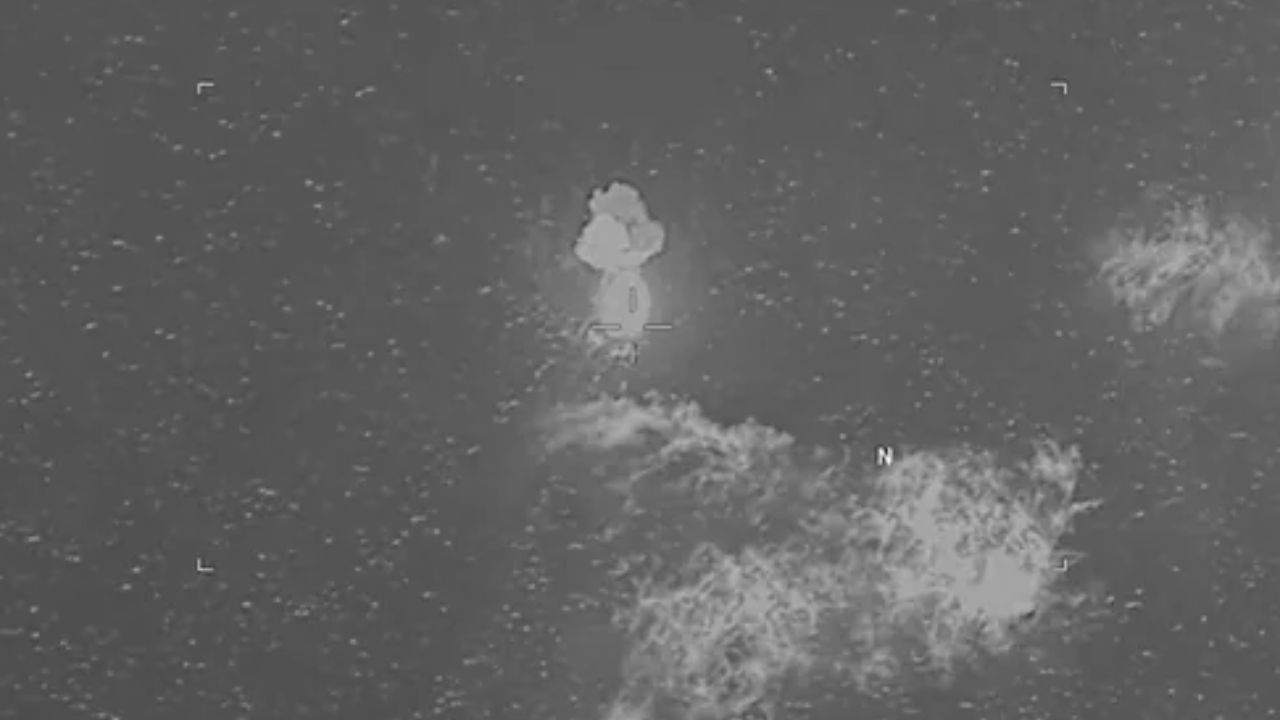
The Pentagon released dramatic footage of a vessel engulfed in flames in the Pacific. The death toll from this ongoing campaign has now crossed 192 — yet no evidence of drugs has ever been publicly shown.
The U.S. military struck another boat in the eastern Pacific Ocean on Friday, killing two men and leaving one survivor clinging to life in open water. U.S. Southern Command posted video on social media showing what appeared to be an explosion followed by a column of fire rising from the ocean’s surface.
The Pentagon said it “immediately notified the U.S. Coast Guard to activate the Search and Rescue system for the survivor,” though it gave no details on the rescue or the survivor’s condition — raising urgent questions about whether the lone survivor was actually saved in time.
“The military has not provided evidence that any of the vessels were carrying drugs.”
This latest strike is part of a months-long campaign that began on September 2, 2024, targeting what the military labels drug-trafficking vessels in the eastern Pacific and Caribbean Sea. The total death toll has now reached at least 192 people. Despite that staggering number, the U.S. military has not publicly provided proof that any of the boats were actually carrying drugs.
The strikes reignited fierce controversy in December 2024 when the Trump administration confirmed a Washington Post report revealing a so-called “double tap” — a follow-on strike on the very first boat attacked on September 2 that killed two survivors of the initial blast. Several lawmakers demanded to know: does targeting survivors constitute a war crime?
Critics and legal experts have continued to question the overall legality of the entire campaign, particularly given the absence of evidence and the growing body count. The White House, meanwhile, showed no signs of slowing down — just this week, President Trump signed off on a new counterterrorism strategy that sets eliminating drug cartels in the Western Hemisphere as the administration’s single highest priority.
Trump has also been pressing regional leaders across Latin America to work more closely with the United States — urging them to take their own military action against drug traffickers and transnational gangs he says pose an “unacceptable threat” to hemispheric security.
As the campaign intensifies with no drug evidence made public, one central question hangs over every strike: are these really drug boats — or is the U.S. military killing fishermen?